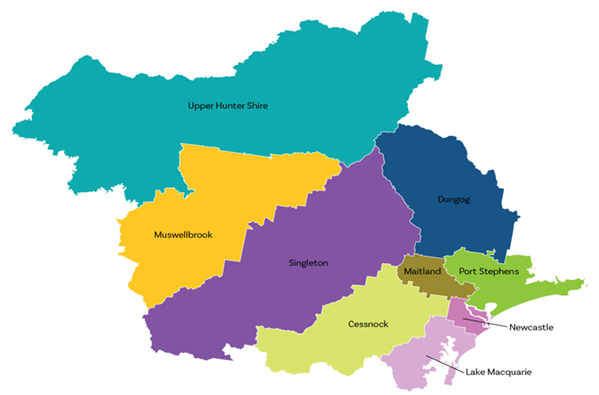

Our LGAs
Cessnock
The City of Cessnock sits at the heart of the Hunter Valley, one of Australia’s most recognised wine regions and a major visitor destination. The LGA includes the regional centre of Cessnock along with a network of villages such as Abermain, Kurri Kurri, and Weston. Wine production, tourism, mining, agriculture and construction underpin the local economy, supported by strong connections to the wider Hunter and major transport corridors.
The area is widely recognised for its wineries, cellar doors and food experiences, playing an increasingly important role in the local economy. Together with events, festivals and outdoor experiences, Cessnock plays a central role in the Hunter’s visitor economy and regional identity.
Dungog
The Dungog Shire is characterised by rolling farmland, river valleys and historic rural villages. Just 2.5 hours north of Sydney and an hour from Newcastle, agriculture, forestry and small businesses are key components of the local economy, while the shire’s scenic landscapes and proximity to Barrington Tops National Park support nature-based tourism and outdoor recreation. The region’s extraordinary natural assets extend beyond adventure; Dungog’s rivers and waterways supply over 80% of the Lower Hunter’s drinking water, making it a critical water resource for the broader region.
Beyond its natural splendour, Dungog offers a distinctive heritage and lifestyle appeal. The heritage-listed town centre includes the James Theatre, Australia’s oldest continuously operating cinema, alongside charming period buildings that reflect the Shire’s rich history. The economy thrives on dairy farming, broad agriculture, sustainable forestry, and timber production, complemented by a growing tourism sector drawn to adventure, heritage, and natural beauty.
Lake Macquarie
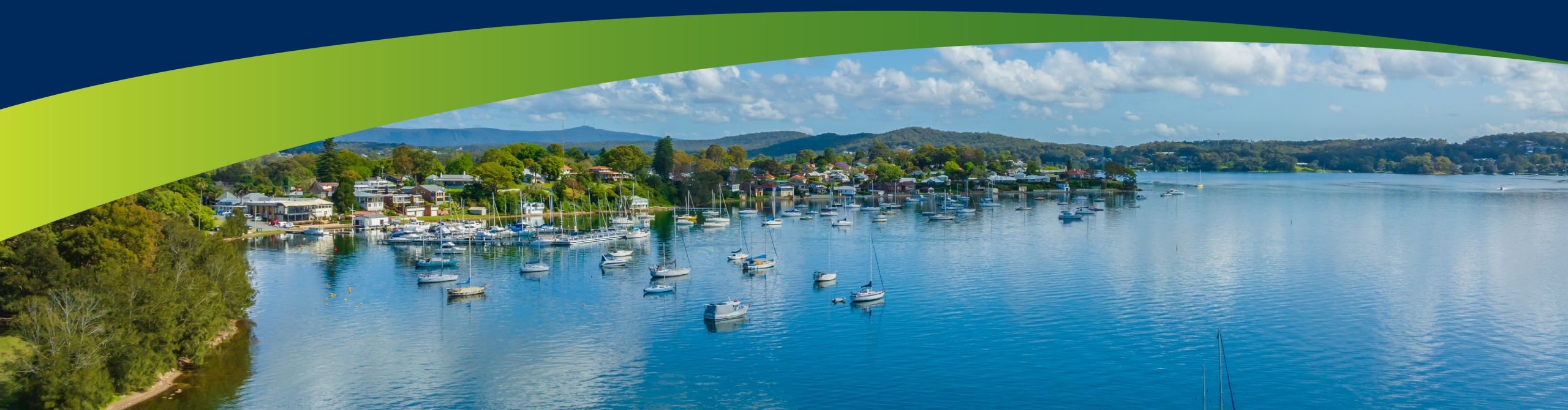
The City of Lake Macquarie surrounds Lake Macquarie, Australia’s largest coastal saltwater lake and a defining natural feature of the Lower Hunter. Located between Newcastle and the Central Coast, the LGA is one of the fastest-growing areas in the region, combining established suburbs with expanding residential communities and employment centres.
The lake itself is a major recreational asset, supporting sailing, fishing and waterfront tourism, while nearby national parks and beaches provide opportunities for outdoor activities. Popular lakeside destinations such as Warners Bay, Toronto and Belmont offer vibrant local centres, walking paths and dining precincts. With growing industries in health, education, manufacturing and services, Lake Macquarie plays an increasingly important role in population growth and economic development across the Hunter.
Maitland
The City of Maitland is one of the Hunter’s fastest-growing regional centres and one of Australia’s most historically significant regional centres. Located on the Hunter River between Newcastle and the vineyards of the Hunter Valley, the LGA combines historic town centres with rapidly expanding residential communities and commercial precincts.
Maitland is known for its heritage streetscapes, thriving arts community and cultural attractions, including the Maitland Regional Art Gallery and the historic village of Morpeth. Major events such as Hunter Valley Steamfest draw thousands of visitors each year. With strong growth in retail, education, construction and professional services, Maitland is an important hub for housing, employment and cultural activity within the Hunter and represents the bridge between the Hunter’s industrial past and its diversified future.
Muswellbrook
The Muswellbrook Shire is centrally located in the Upper Hunter and serves as a key centre for surrounding mining and agricultural industries. The town of Muswellbrook sits along major road and rail corridors linking the Upper Hunter with the Lower Hunter and regional New South Wales.
Coal mining, agriculture and equine enterprises are central to the local economy, alongside emerging opportunities in energy and regional services. The area also features cultural and visitor attractions including the Muswellbrook Regional Arts Centre, heritage walks showcasing historic buildings and local events such as the Great Cattle Dog Muster. The region is actively planning for economic transition and diversification, positioning itself for sustainable growth beyond traditional mining, while celebrating its heritage and maintaining its role as a vital regional hub.
Newcastle
The City of Newcastle is the metropolitan and economic centre of the Hunter Region. Located approximately 160km north of Sydney, Newcastle combines a major working harbour, vibrant city centre and internationally recognised beaches. The city is fast-establishing itself as an innovation powerhouse with significant investments in clean technology, decarbonisation research, and future industries while maintaining its coastal lifestyle appeal and world-class beaches.
The city’s economy is diverse, spanning health, education, defence, logistics and advanced manufacturing. Key features include the Port of Newcastle, one of the largest bulk export ports on Australia’s east coast, as well as universities, research institutions and cultural facilities. Newcastle’s strategic location, leading research institutions, skilled workforce, and $500 million revitalisation project position it as an attractive destination for talent, businesses, and investment seeking to be part of the energy transition and net-zero economy.
Port Stephens
The Port Stephens Council area lies on the Hunter’s coastal edge, approximately 2.5 hours north of Sydney and 33km from Newcastle. Known for its natural landscapes and relaxed coastal lifestyle, the area features a diverse coastline of beaches, bays and marine environments that form part of the Port Stephens–Great Lakes Marine Park.
Tourism is a major contributor to the local economy, supported by natural attractions such as the Worimi Conservation Lands, home to the largest moving coastal sand dune system in the Southern Hemisphere, and panoramic viewpoints from Mount Tomaree. Dolphin watching, boating, fishing and seasonal whale migration are popular activities within the bay. Alongside tourism and hospitality, industries such as fishing, residential development and defence contribute to the area’s economic role within the Hunter region.
Singleton
The Singleton Local Government Area sits at the northern gateway to the Hunter Valley, linking the Lower Hunter with the Upper Hunter. Anchored by the regional centre of Singleton, the area provides services, employment and infrastructure for surrounding communities and industries across the broader Hunter Region. Mining, agriculture, viticulture and equine enterprises form the backbone of the local economy, supported by the region’s location along the Hunter River and major transport corridors that connect local businesses with national and international markets.
Beyond its economic strengths, Singleton offers a high quality of life shaped by heritage streetscapes, productive farmland and proximity to renowned wine country. The area’s towns and villages provide strong local communities, access to outdoor recreation and nearby national parks, while remaining within easy reach of major regional centres such as Newcastle. This balance of industry, lifestyle and connectivity makes Singleton an important contributor to the Hunter’s ongoing growth and regional resilience.
Upper Hunter
The Upper Hunter Shire occupies the northern part of the Hunter region and is internationally recognised for its thoroughbred horse breeding industry. The town of Scone, often known as the horse capital of Australia, serves as the main service centre for surrounding rural communities and world-renowned stud farms.
While known for its world-class horse industry, the Upper Hunter also offers diverse natural landscapes, with bushland, national parks and access to the Barrington Tops region. Agriculture, equine enterprises, mining and tourism all contribute to the local economy. Attractions such as the Hunter Warbirds Museum, local wineries and the Scone Horse Festival highlight the region’s heritage and visitor appeal. Together, these strengths position the Upper Hunter as an important contributor to the Hunter’s economic and cultural landscape.