Past Projects

The Hunter Innovation Scorecard 2013 is an RDA Hunter initiative which measured the region’s innovation footprint and promoted its innovative capability in research and development, education and various industry sectors.

DOWNLOAD

WATCH THE VIDEO

RDA Hunter’s 2014 hunter innovation scorecard measured the Hunter Region’s performance against international leaders in the European Union.

DOWNLOAD

The Deloitte Access Economics report Prospects and Challenges for the Hunter Region was commissioned by Regional Development Australia Hunter. It examined the longer-term influences which are likely to shape the Hunter economy over the next two decades building on its strong foundations of mining, agriculture and services.

DOWNLOAD

RDA Hunter strongly advocated for the High Speed Rail Network construction on Australia’s East Coast and further, that the first part of construction commences within the Newcastle to Canberra leg.

The benefits of this project include linking areas with the greatest concentration of population; HSRN’s potential as a commuter service between Newcastle, Central Coast, Sydney and Canberra increasing capacity to support growth in rail freight on other lines; and tourism benefits for the cities and regions included on the route.

RDA Hunter led a delegation to Canberra in 2012 to advocate for the project and maintains a watching brief.

The Hunter Economic Infrastructure Plan (HEIP) was funded by the Commonwealth for the purpose of ensuring the region had an integrated plan that assisted mining communities, improved export capacity and supported the Hunter’s future economic growth.

It intended to fortify the need for a holistic approach, so that no significant project or piece of work (however small it may seem) is overlooked nor duplicated, and different interests are addressed with a balanced hand. The HEIP was developed to enable a whole of supply chain view of mining related activities in the Hunter region.

DOWNLOAD

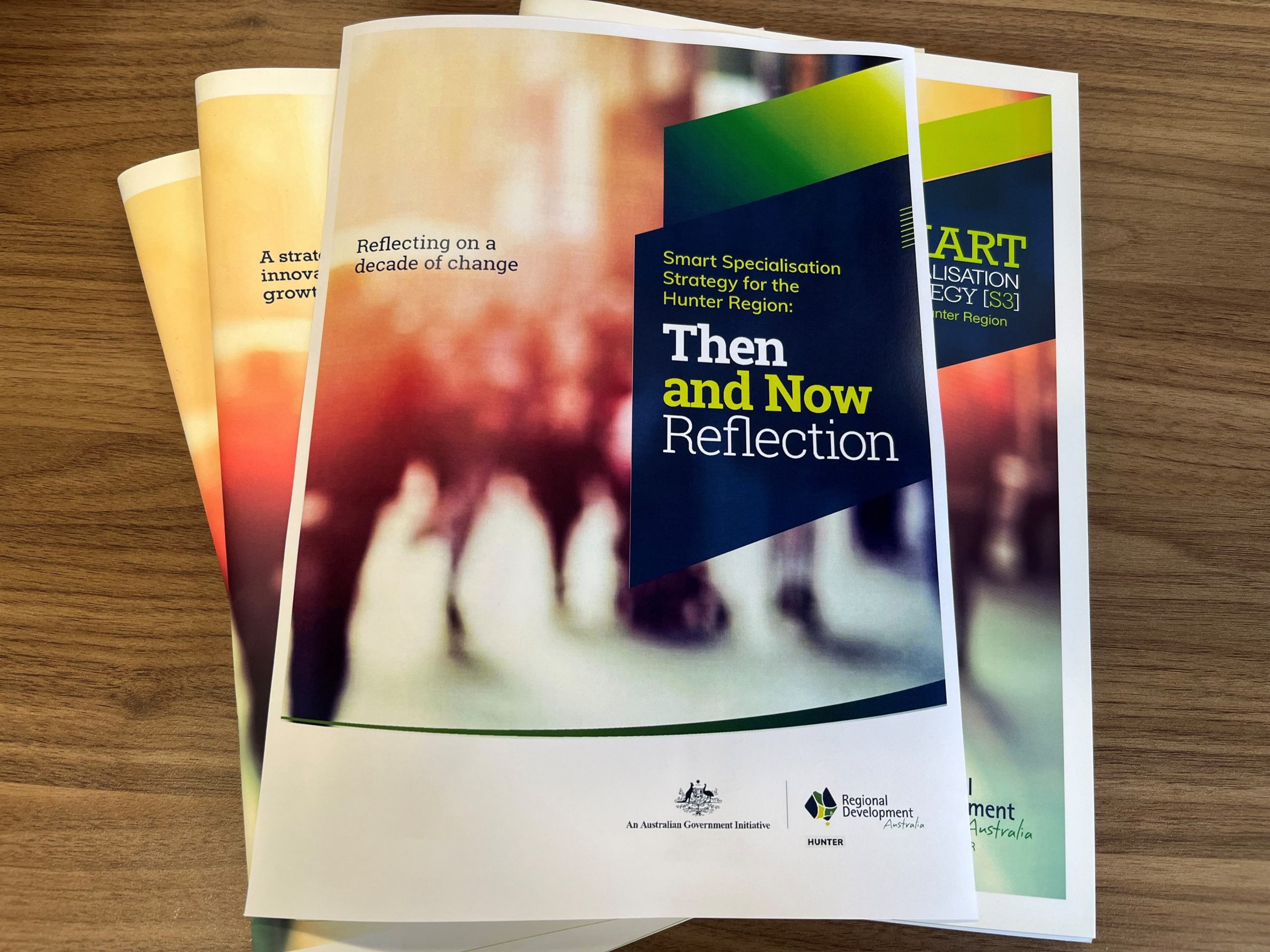
RDA Hunter’s Smart Specialisation initiative was about the Hunter’s future – creating jobs and economic growth to help the Hunter grow and remain internationally competitive.

Priority areas identified in the Strategy were those which were deemed to create jobs and economic prosperity, that had potential to employ people – especially in more technically advanced jobs as the Hunter will continue to experience a shift in its industrial base.

Smart Specialisation is an OECD framework (implemented widely across the European Union) which establishes an agenda for economic transformation by analysing and defining regional competencies and determining new areas of opportunity

The Hunter’s Smart Specialisation identifies:

  • the region’s current and most promising unique strengths;
  • businesses that will create the jobs of the future;
  • productive research and innovation activities; and
  • collaborations to improve productivity, competitiveness and prosperity.

The Hunter’s 7 competitive advantages were identified as:

  1. Food and agri-business
  2. Mining equipment, technology and services
  3. Medical technologies and pharmaceuticals
  4. Oil, gas and energy resources
  5. Advanced manufacturing
  6. Defence
  7. Creative Industries


DOWNLOAD

An analysis of the Hunter’s economy post the closer of BHP’s steelmaking facility in 1999.

DOWNLOAD

The purpose of this paper was to raise awareness within the Federal, NSW and Local governments of the critical importance of urban planning for the Hunter. It aimed to articulate the opportunity that existed, within the region, to draw together the many plans currently in existence with those in development. In the paper, RDA Hunter presented the case for a strategic and integrated approach as the key to delivering the comprehensive and cohesive long–term urban infrastructure plan necessary to underpin sustainable growth in the Hunter’s population and productivity into the future.

DOWNLOAD